Foundations

groups for parents of neurodivergent children
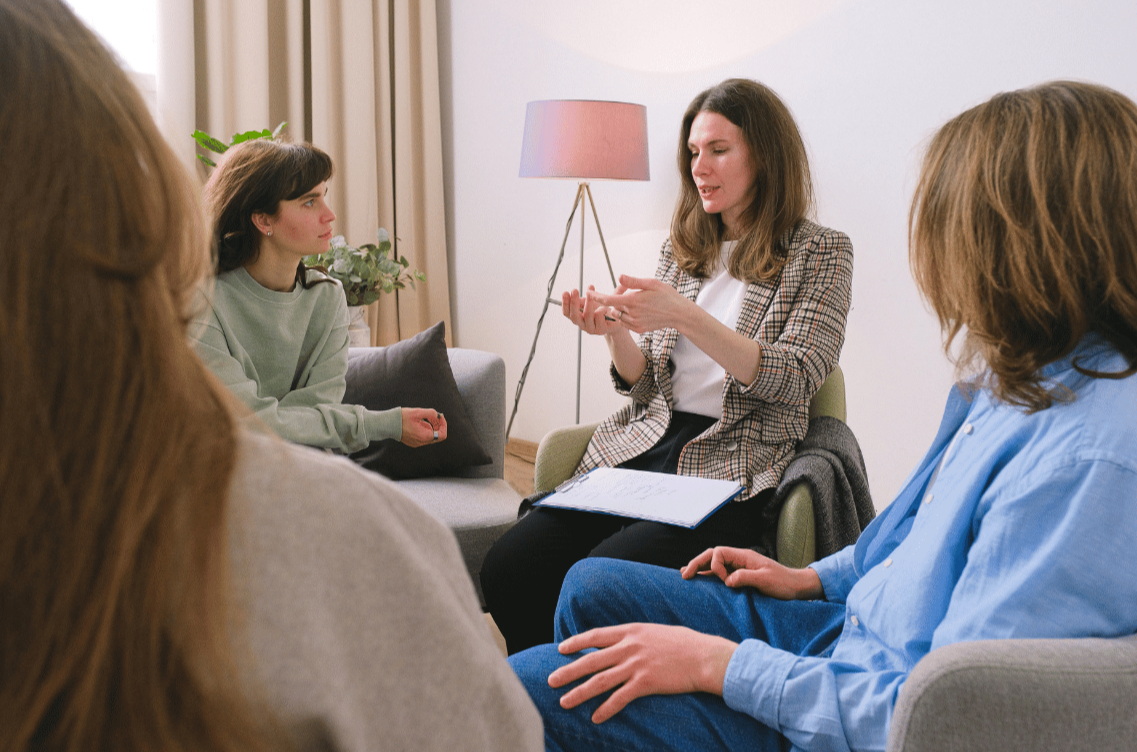

Therapy groups for parents of neurodivergent children, teens, and adults with neurodevelopmental differences including autism and/or ADHD.
"Children are not meant to be raised by techniques. They are meant to be raised through relationships."
— Gordon Neufeld
Parenting is challenging enough without feeling like all the advice you're receiving was written for a different child.
Many parents of neurodivergent children find themselves wondering why the strategies that seem to work for other families don't work for theirs. You may have read the books, followed the recommendations, tried sticker charts, consequences, rewards, or countless other approaches, only to find yourself feeling frustrated, confused, or overwhelmed.
The truth is that neurodivergent children often experience the world differently. They may process information differently, communicate differently, respond to stress differently, or have unique sensory, emotional, and developmental needs. When we don't understand those differences, even the best parenting advice can miss the mark.
Our parent groups are designed to help you better understand your child and their unique way of experiencing the world. Through education, discussion, and support from other parents on similar journeys, you'll gain practical tools, deeper insight, and greater confidence in supporting your child.
Whether your child is a preschooler, school-aged child, teen, or young adult, our goal is the same: to help you build the understanding, connection, and confidence needed to support your child in ways that are effective and aligned with who they are. Because when children feel understood, they are better able to thrive. And when parents feel supported and informed, they can spend less time questioning themselves and more time connecting with their child.
our foundations groups
first foundations
a 4-session educational parent groupbuilding foundations
support group for parents of young childrenlasting foundations
support group for parents of adult childrenFirst foundations
For Parents of Newly Diagnosed Neurodivergent Children
-
Receiving a diagnosis, recognizing developmental differences, or realizing that your child experiences the world differently can bring up many questions and emotions. Many parents find themselves overwhelmed by conflicting advice and unsure how best to support their child.
First Foundations is a four-week psychoeducational group designed to help parents better understand neurodivergence through a developmental and relationship-based lens. Together, we explore how neurodivergent children experience the world, build practical tools for supporting growth and regulation, and connect with other parents navigating similar experiences.
Our goal is not to change who your child is, but to help you better understand their unique strengths, challenges, needs, and ways of relating so that you can support them with confidence and connection.
Our First Foundations group is facilitated by Dr. Ashlee Reid. To learn more about Dr. Reid, you can read her bio on our website.
-
First Foundations focuses on:
Understanding autism, ADHD, and neurodivergent development
Learning how developmental differences influence behavior, communication, and relationships
Building confidence in parenting a neurodivergent child
Understanding emotional regulation and co-regulation
Exploring sensory processing and individual differences
Learning relationship-based approaches to supporting growth
Connecting with other parents navigating similar experiences
Developing a strengths-based understanding of your child
-
Our First Foundations group meets quarterly based on participant availability and scheduling preferences.
Fees are $325 for the 4-session group. Superbills are provided weekly after each group session.
small Steps

ages 7-9-
Small Steps is an in-person group informed by the DIR-Floortime® model. This group supports school-aged children experiencing challenges in relating with peers, initiating or maintaining friendships, or navigating group dynamics due to neurodivergence, social anxiety, and/or emotion regulation difficulties.
Our Small Steps group is facilitated by Dr. Savannah Sweet. To learn more about Dr. Sweet, you can read her bio on our website.
-
Small Steps focuses on:
Strengthening emotional identification and regulation
Increasing reciprocal peer interaction and shared attention
Supporting flexible thinking and problem-solving
Building peer connection through play-based engagement
Promoting self-advocacy in peer interactions
Fostering joy in relating with others
-
DIR-Floortime® is a relationship-based approach that focuses on a child’s Developmental level, Individual differences (such as sensory processing and regulation), and Relationships to support emotional and social growth. This model uses child-led play to build connection, regulation, communication, and problem-solving skills.
Dr. Sweet’s role as the group facilitator is to meet group members at their developmental level and support with expanding interactions to promote shared attention, emotional engagement, and problem-solving with their peers.
-
Our Small Steps group meets on Mondays from 4:30pm-5:30pm
Session fee is $90 per week. Superbills are provided weekly after each group session.
Big Steps

ages 10-12-
Big Steps is an in-person group informed by the DIR-Floortime® model for neurodivergent children ages 10–12. This group is designed for children who experience challenges with peer relationships, emotional regulation, flexible thinking, self-confidence, or navigating increasingly complex social situations due to neurodivergence, anxiety, and/or social-emotional differences.
As children enter late elementary school, social interactions become more nuanced and expectations for independence, self-awareness, and problem solving increase. Big Steps provides a supportive environment where children can strengthen their understanding of themselves and others while building genuine connections with peers.
This group includes regular parent consultation and education sessions designed to help caregivers better understand their child's developmental profile and support continued growth at home and in everyday settings.
Big Steps is facilitated by Dr. Ashlee Reid. To learn more about Dr. Reid, please visit her bio on our website.
-
Big Steps focuses on:
Strengthening emotional awareness, insight, and regulation
Expanding reciprocal peer interaction and collaborative problem solving
Supporting flexible thinking and perspective taking
Building confidence in social situations
Increasing self-awareness of how thoughts, feelings, and behaviors impact relationships
Promoting self-advocacy and communication skills
Developing resilience following social challenges and disappointments
Encouraging peer connections through shared experiences
Supporting parents in understanding and reinforcing developmental strategies at home
-
DIR-Floortime® is a relationship-based approach that focuses on a child's developmental level, individual differences, and relationships to support emotional, social, and cognitive growth.
For older children, DIR-Floortime® emphasizes helping children reflect on their experiences, understand their own emotions and perspectives, consider the thoughts and feelings of others, and engage in increasingly complex problem solving and social interactions.
Dr. Reid's role as group facilitator is to create opportunities for connection, support emotional growth, and help group members develop greater flexibility, self-awareness, confidence, and problem-solving abilities within the context of real peer relationships.
-
Our Big Steps group meets on Thursdays from 4:00pm-5:00pm
Session fee is $90 per session. Superbills are provided weekly following each group session.
we support neurodivergent people with:
-
Identity & Self-Understanding
Exploring what it means to be neurodivergent, building self-awareness, and developing a sense of identity that feels authentic and affirming. -
Sensory Experiences & Overwhelm
Understanding and navigating sensory sensitivities, overload, and the impact of environments that may feel too much or not supportive enough. -
Executive Functioning & Daily Life Skills
Challenges with organization, planning, time management, and follow-through, as well as building systems that support everyday functioning. -
Burnout, Masking, and Fatigue
Experiences of exhaustion from trying to meet neurotypical expectations, masking or camouflaging neurodivergence, and the impact this can have on well-being. -
Emotional Regulation & Self-Advocacy
Support with understanding emotions, managing overwhelm, communicating needs, and advocating for oneself in different environments. -
Health, Relationships & Life Transitions
Navigating concerns related to eating, sleep, hygiene, relationships, school/work, and major life changes in a way that supports overall well-being.
Sensory & Communication Considerations
We aim to adapt therapy sessions to support each individual’s unique way of communicating, processing, and experiencing the world to the best of our ability. Rather than expecting individuals to adjust to therapy, we shape the therapeutic space to better meet their needs.
We are intentional in how we design each session so that it feels accessible, respectful, and responsive. Our goal is to create a space where individuals feel understood, supported, and able to engage in ways that are natural to them.
This may include:
Honoring different communication styles, including verbal and nonverbal expression
Supporting sensory preferences and sensitivities
Adjusting pacing to align with processing speed
Working within each person’s executive functioning strengths and challenges
Creating an environment that feels predictable, structured, and safe
curious about Individual therapy
or Family therapy?
Read more below about our different therapy services.